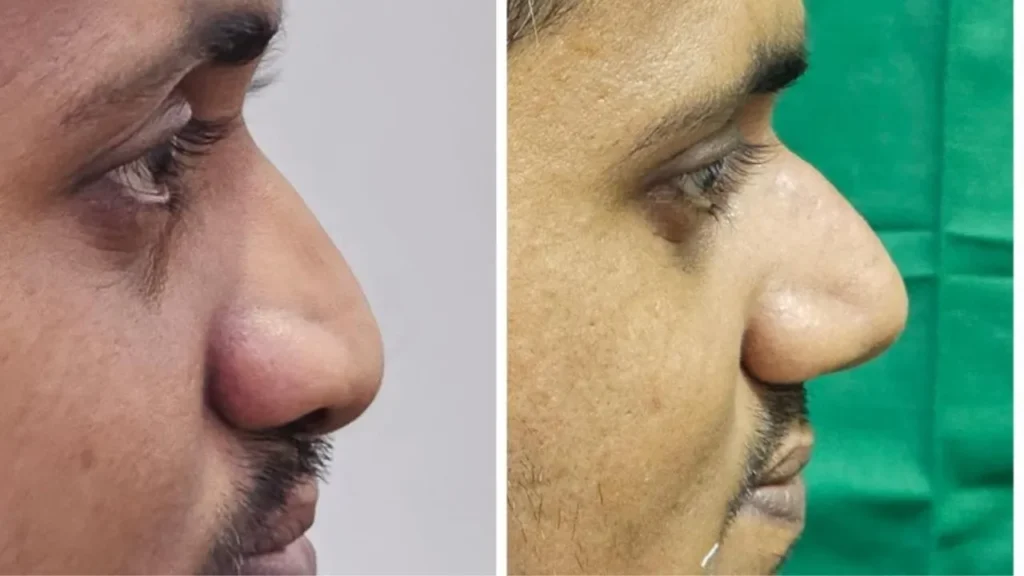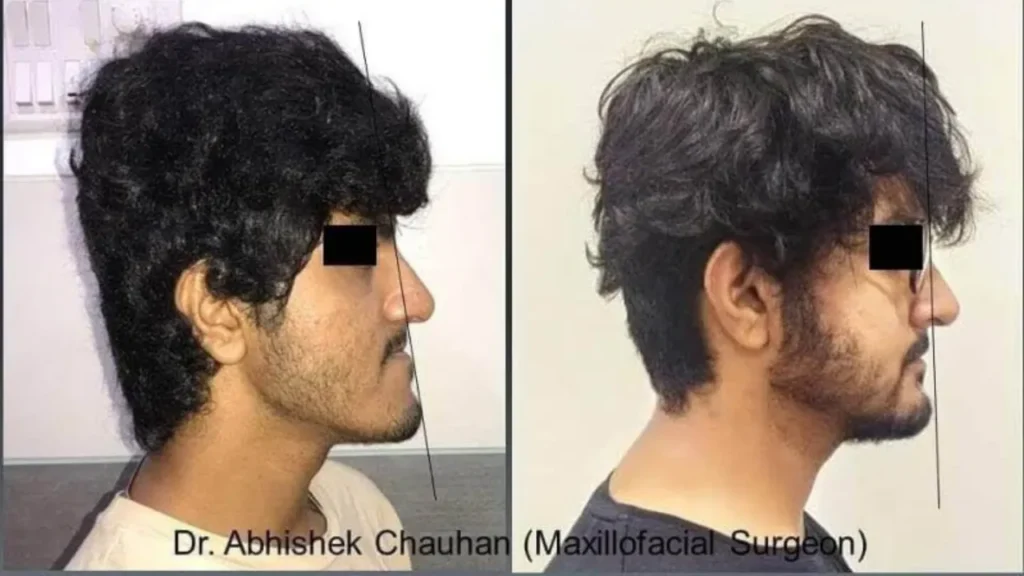
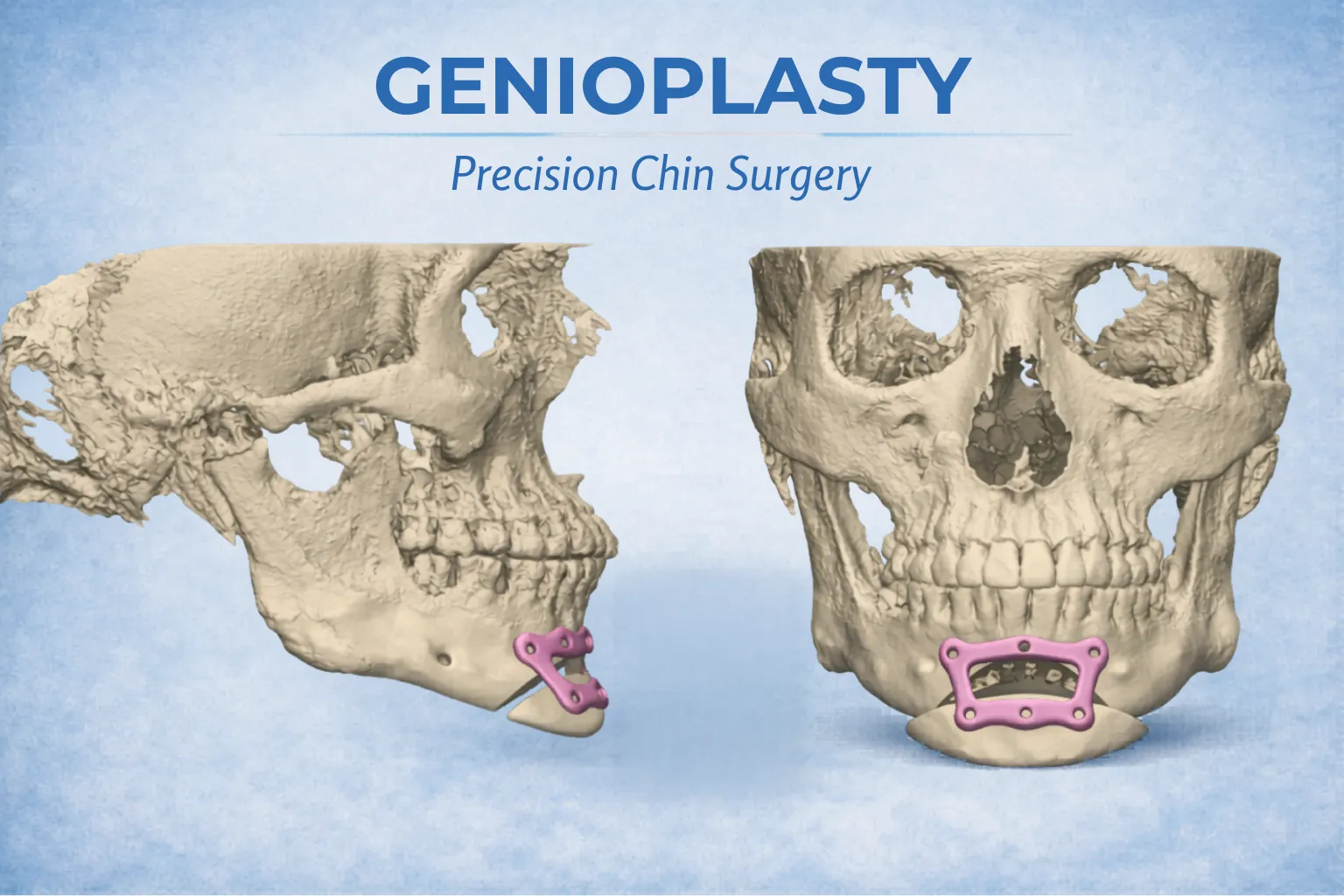
Genioplasty is a highly versatile surgical procedure that reshapes the chin to improve facial harmony, profile aesthetics, and functional balance. Unlike chin implants, genioplasty uses the patient’s own bone, making it a preferred option in maxillofacial practice for both cosmetic and reconstructive indications.
Understanding Chin Anatomy
The chin (mandibular symphysis) plays a crucial role in:
- Lower facial height
- Profile balance (nose–lips–chin relationship)
- Lip competence
- Airway and soft tissue support
Key landmarks include:
- Pogonion (most anterior chin point)
- Menton (lowest point of chin)
What is Genioplasty?
Genioplasty is a surgical repositioning of the chin segment through controlled osteotomy. It allows three-dimensional correction, including:
- Advancement (forward movement)
- Setback (backward movement)
- Vertical lengthening or shortening
- Asymmetry correction
This makes it far superior to implants in terms of customization.
Indications for Genioplasty
Aesthetic Indications:
- Receding chin (retrognathia)
- Prominent chin (prognathic chin)
- Facial asymmetry
- Poor profile balance
Functional Indications:
- Lip incompetence
- Mentalis strain
- Obstructive sleep apnea (adjunctive role)
- Post-traumatic deformities
Types of Genioplasty
1. Sliding (Osseous) Genioplasty
- Most commonly performed
- Chin bone is cut and repositioned
- Fixed with titanium plates/screws
2. Vertical Genioplasty
- Alters lower facial height
- Can lengthen or reduce chin height
3. Asymmetry Correction
- Corrects lateral deviations
- Improves facial symmetry
Surgical Procedure Overview
The procedure is typically performed under general anesthesia:
- Intraoral incision (no visible scar)
- Exposure of mandibular symphysis
- Careful identification of mental nerves
- Osteotomy (bone cut) using precision instruments
- Repositioning of chin segment
- Fixation with titanium plates and screws
- Layered closure
Advantages of Genioplasty
- No external scars
- Uses patient’s own bone (no foreign body)
- Highly customizable (3D correction)
- Permanent and stable results
- Can be combined with orthognathic surgery
Risks and Complications
- Temporary or rarely permanent numbness (mental nerve)
- Infection
- Hematoma
- Malposition or asymmetry
- Hardware-related issues
With proper technique, these complications are uncommon.
Postoperative Care
- Swelling peaks in 48–72 hours
- Soft diet for 1–2 weeks
- Ice packs in early phase
- Maintenance of oral hygiene
- Avoid trauma to chin region
- Follow-up for suture and healing assessment
Results and Outcomes
- Improved facial profile and balance
- Enhanced chin projection and symmetry
- Better lip competence
- Long-lasting and predictable outcomes
Results are often immediately visible, with final refinement over weeks as swelling subsides.
Genioplasty vs Chin Implants
| Feature | Genioplasty | Chin Implants |
| Material | Patient’s own bone | Synthetic |
| Customization | High (3D) | Limited |
| Stability | Excellent | Moderate |
| Infection risk | Lower | Slightly higher |
| Reversibility | Surgical | Easier removal |
Conclusion
Genioplasty is a powerful and precise surgical tool in maxillofacial surgery that goes beyond aesthetics. It allows correction of both form and function, delivering stable, natural, and long-term results.
For patients seeking improvement in facial harmony or functional issues related to chin position, genioplasty offers a scientifically sound and highly predictable solution.